A Complete Guide to Wisdom Tooth Removal: What to Expect
If you are experiencing discomfort at the back of your mouth, your wisdom teeth might be the culprit. Wisdom tooth removal is one of the most common dental procedures, yet it often brings up many questions. Whether you are experiencing pain or have been advised by a dentist to consider extraction, understanding the process can help you prepare with confidence.
What is Wisdom Tooth Removal?
Wisdom tooth removal is a routine surgical procedure performed to extract one or more third molars—the four permanent adult teeth located at the very back of the mouth on the top and bottom—typically because they are impacted, causing pain, or posing a risk to adjacent teeth and overall oral health.
Why Do Wisdom Teeth Need to Be Removed?
Not everyone needs their wisdom teeth removed. If they grow in completely, are correctly positioned, and can be easily cleaned, they can be left alone. However, problems often arise because the human jaw frequently lacks the space to accommodate these late-emerging teeth.
Here are the primary reasons extraction is recommended:
- Impaction: The tooth remains trapped beneath the gum line or jawbone, which can lead to infection or cysts.
- Partial Eruption: A wisdom tooth that only partially breaks through the gum creates a hard-to-clean opening where bacteria can easily thrive, increasing the risk of gum disease and decay.
- Crowding: Emerging wisdom teeth can push against adjacent molars, shifting other teeth and undoing orthodontic work.
- Decay and Cavities: Due to their location at the very back of the mouth, wisdom teeth are notoriously difficult to brush and floss, making them highly susceptible to decay.
The Assessment and Extraction Process
Modern dental technology has streamlined the extraction process, making it highly predictable and structured.
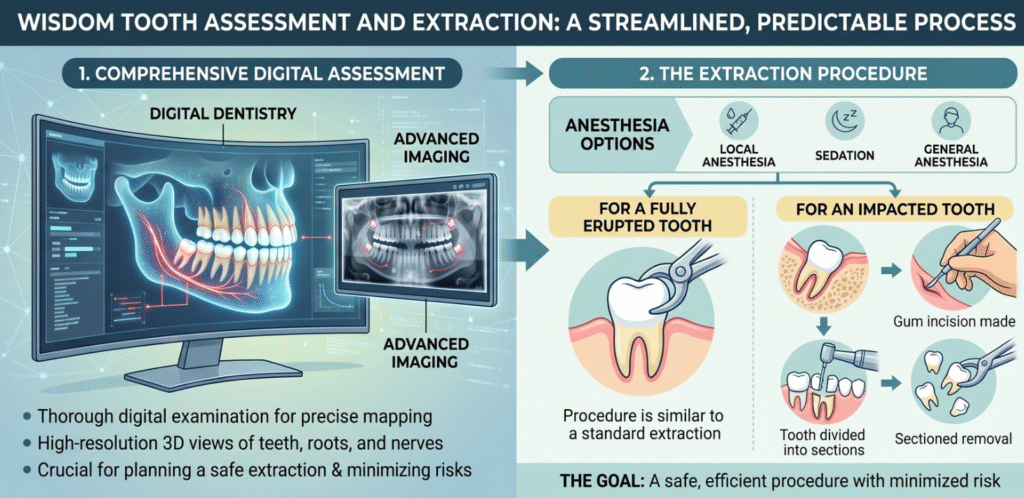
1. Comprehensive Digital Assessment
Before any procedure, a thorough examination is necessary. Utilizing digital dentistry, including 3D imaging and panoramic X-rays, it allows for a highly precise view of the teeth, roots, and surrounding nerves. This exact mapping is crucial for planning a safe extraction and minimizing risks.
2. The Procedure
Depending on the complexity of the impaction, the extraction may be performed under local anesthesia, sedation, or general anesthesia.
- For a fully erupted tooth, the procedure is similar to a standard extraction.
- For an impacted tooth, a small incision is made in the gum tissue to expose the tooth and bone. The tooth may be divided into sections for easier and safer removal.
3. Immediate Aftercare
Once the tooth is removed, the area is cleaned, and stitches (often dissolvable) may be placed to aid healing. Gauze is positioned over the extraction site to control bleeding and help a blood clot form.
- Rest: Limit physical activity for the first 24 to 48 hours.
- Ice: Apply an ice pack to the outside of your cheek to reduce swelling during the first day.
- Diet: Stick to soft foods such as yogurt, soup, and mashed potatoes for the first few days. Avoid hot, spicy, or crunchy foods.
- Hydration: Drink plenty of water, but do not use a straw, as the suction can dislodge the healing blood clot.
- Oral Hygiene: Continue brushing your other teeth gently, but avoid the extraction site. Rinse gently with warm salt water starting 24 hours after the surgery.
Essential Recovery Tips
Proper aftercare is essential for a smooth recovery and to prevent complications like dry socket.
- The Process: The dentist takes digital scans or physical impressions of the teeth to fabricate custom-fitted plastic trays. These trays ensure even application of the gel and minimize contact with the gums. Patients are provided with the trays and professional-strength whitening gel to apply themselves.
- Duration: The custom trays are typically worn for 30 to 60 minutes daily over a period of one to two weeks, depending on the dentist’s prescription and the gel’s concentration.
- Outcome: The whitening effect is achieved gradually, allowing patients to control the process at their own pace.
When to Consult a Professional
If you are experiencing jaw stiffness, swelling, or localized pain near the back of your mouth, it is advisable to seek a professional evaluation. Early assessment can prevent more complex dental issues down the road.
At Meiplus Dentalcare, our team is equipped with digital dentistry tools to provide thorough assessments and comprehensive care tailored to your specific clinical needs. If you suspect your wisdom teeth are causing issues, scheduling a consultation will provide you with a clear understanding of your oral health and the best appropriate steps forward.
Meiplus Dentalcare Tanjong Pagar (Flagship Clinic)
📍Address: 1 Tanjong Pagar Plz, #02-24, S082001
📞 Tel: 65381400
📲 WhatsApp: 9787 1209
Meiplus Dentalcare Marine Parade
📍 Address: 141 East Coast Road S428831
📞 Tel: 65141200
📲 WhatsApp: 8837 5481