Gentle Dental Care
for Kids
Our general dentists provide patient, unhurried dental care for infants, children and adolescents at our Tanjong Pagar and Marine Parade clinics — with a dedicated children’s room and no treatment started until your child is ready.
Children’s dentistry covers dental care for infants, children and adolescents — check-ups and cleaning, fluoride treatment, sealants, and cavity treatment. At Meiplus Dentalcare our general dentists provide this care in a comfortable, child-friendly setting, explaining each step so children know what to expect. We are not paediatric dentistry specialists; where a child needs specialist-level care we can advise on a referral. A child’s first dental visit is generally recommended within six months of their first tooth appearing, or by age one.
What Is Children’s Dentistry?
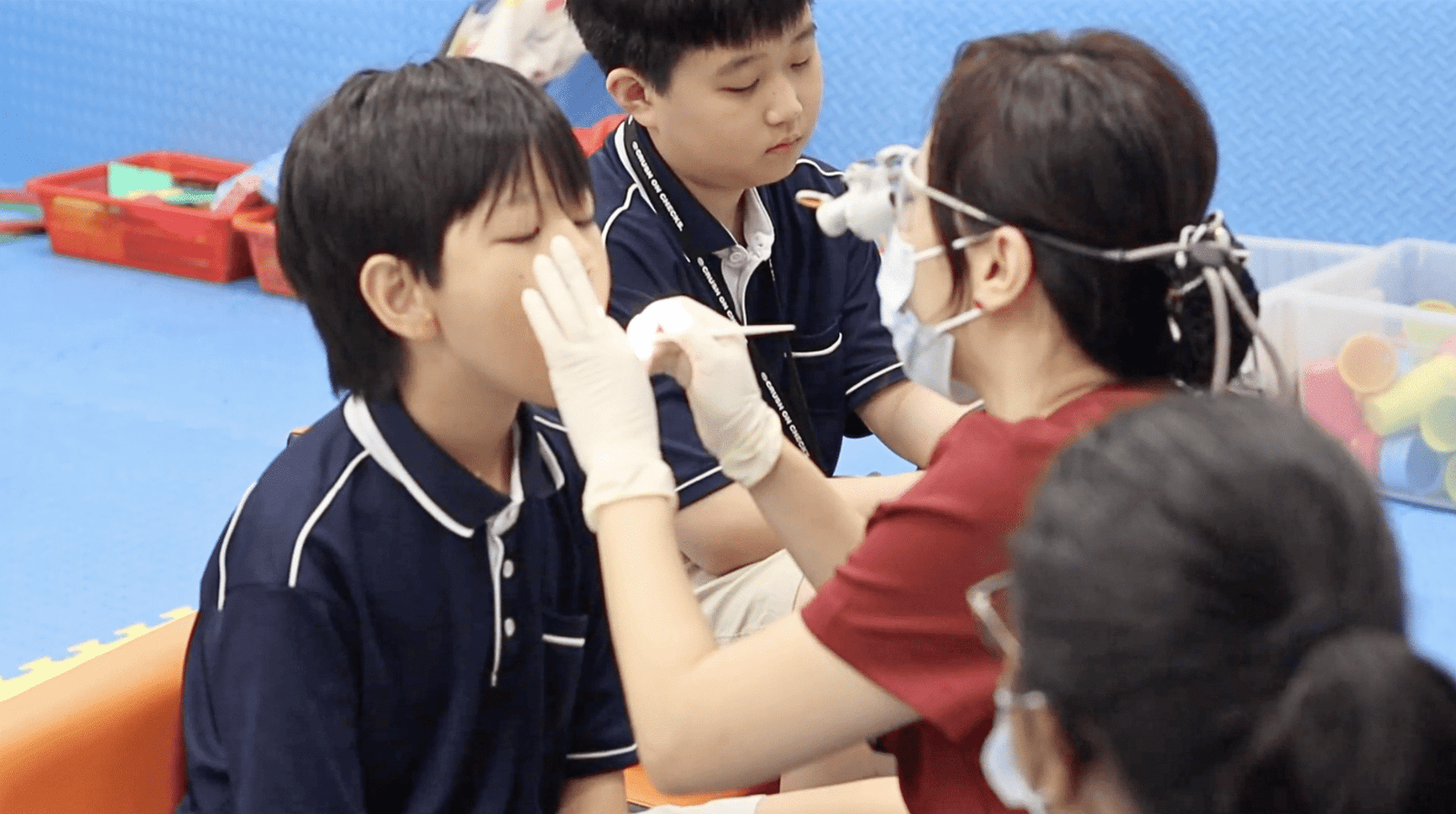
Children’s dentistry is dental care for infants, children and adolescents. At Meiplus Dentalcare our team is focused on making the visit a positive one — because a child’s early experiences at the dentist shape how they feel about it for years afterward.
Going to the dentist can be a stressful event for a young child. We explain what we’re doing and why before and during treatment, and we take time over oral hygiene, since childhood is when habits form that tend to last. We will not begin any treatment until your child is comfortable enough for it.
A word on terminology. “Children’s dentistry” describes the care; “paediatric dentistry” is a registered dental specialty requiring postgraduate qualification. Meiplus provides the former. The section below sets out exactly what that means for your child.
Terms You’ll Hear
- Children’s dentistrywhat we provide
- Dental care for infants, children and adolescents — check-ups, cleaning, preventive treatment and cavity treatment. Used broadly for children’s dental care, whether provided by a general dentist or a specialist.
- Paediatric dentistrypaedodontics — a specialty
- A registered dental specialty focused exclusively on children, requiring postgraduate qualification beyond a general dental degree. Meiplus Dentalcare’s dentists are general dentists experienced in treating children, not paediatric dentistry specialists.
- Primary teethbaby teeth
- The first set of teeth, appearing from around 6 months and gradually replaced by permanent teeth from around age 6.
- Dental sealanta protective coating
- A thin coating applied to the chewing surfaces of back teeth to keep food and bacteria out of the grooves where decay starts.
- Fluoride treatmentstrengthens enamel
- A topical application of fluoride that hardens tooth enamel and reduces the risk of cavities.
General Dentist vs
Paediatric Dental Specialist
Parents often search for a “paediatric dentist”, so here’s what that term means — and where we fit.
Meiplus Dentalcare’s dentists are general dentists, not paediatric dentistry specialists. We treat children as part of general family dental care, and we’d rather you knew that now than at the appointment.
- Routine check-ups and cleaning
- Fluoride treatment and sealants
- Cavity treatment and fillings
- Early orthodontic assessment
- Seeing the whole family at one clinic
- Significant dental anxiety
- Complex developmental concerns
- Children with special healthcare needs
- Specialised behaviour guidance
- Treatment under sedation or general anaesthesia
We’ll tell you if a specialist is the better fit
For routine children’s dental care a general dentist is a perfectly good choice, and having the whole family seen at one clinic is genuinely easier. But if your child needs specialist-level care, we would rather say so than attempt something outside our scope — we’re happy to advise on a referral at consultation.
When Should My Child
First See a Dentist?
Or within six months of the first tooth appearing — whichever comes first. This early visit is mostly about getting your child used to the dental environment and giving you guidance on care at home, rather than any active treatment.
Familiarisation first
A first visit is short and gentle. Your child sits in the chair, meets the dentist, and we take a look — nothing more if that’s all they’re ready for.
Guidance for you
We’ll talk through brushing technique, fluoride toothpaste amounts by age, feeding habits that raise decay risk, and what to expect as teeth come through.
Then every six months
Most children benefit from a check-up twice a year, though your dentist may suggest a different interval based on your child’s decay risk and how their teeth are developing.
Why Baby Teeth Matter
They’re temporary, but they aren’t disposable. Baby teeth do real work while they’re there — and losing one too early has consequences that outlast the tooth.
They hold space
Each baby tooth reserves the gap for the permanent tooth beneath it. Lose one early to decay or injury and neighbouring teeth can drift into the space, crowding out the adult tooth meant to take its place.
They shape speech and chewing
Children learn to form sounds and chew properly with a full set of teeth. Gaps at the wrong time can affect both.
They affect confidence
Visible decay or missing front teeth can make a child self-conscious at exactly the age they’re learning to be social.
Common Dental Problems
in Young Children
Tooth decay in children is largely preventable, but it remains the most common problem we see. Catching it early is what keeps treatment simple.
How often, not how much. Frequent exposure to sugary food and drinks matters more than the total amount consumed. Every exposure feeds decay-causing bacteria and starts a fresh acid attack on the enamel. One sweet treat after a meal does less harm than the same amount sipped or nibbled across an afternoon — and that includes fruit juice and flavoured milk, which parents often don’t count as sugar.
Early Signs to Watch For
White or brown spots
Chalky white patches near the gum line are often the earliest visible stage of decay, before any hole forms. Brown staining suggests it has progressed further.
Visible holes or pits
An obvious hole or pit in a tooth surface means decay has broken through the enamel and needs treating.
Sensitivity
A child flinching at cold drinks or ice cream, or avoiding chewing on one side, is worth investigating.
Pain while eating
Complaints of pain when eating — particularly with sweet or cold foods — usually mean decay has reached the deeper layers.
Teething discomfort
Sore, swollen gums, dribbling and irritability as new teeth push through. Normal, but worth distinguishing from decay.
Persistent thumb-sucking
Common and usually harmless in toddlers, but if it continues once permanent teeth arrive it can affect how they align.
Decay can advance without any pain at all. That’s precisely why six-monthly check-ups matter for children — most cavities we find were causing no symptoms the parent could have noticed.
Dental Treatments
for Children
What we provide for children at both clinics. Most of it is preventive — which is the point.
Regular check-up
A routine examination to monitor how teeth are developing and catch problems while they’re still small. Usually every six months.
Dental sealants
A thin protective coating painted onto the chewing surfaces of the back teeth, sealing the deep grooves where food and bacteria collect and where decay in children most often begins.
Topical fluoride treatment
A quick application of fluoride that hardens the enamel and makes teeth more resistant to the acid that causes cavities.
Early orthodontic assessment
An alignment check to see whether the bite and jaw are developing as expected, and whether early treatment would help. See our braces and Invisalign for children pages for what that involves.
Tooth decay treatment
Gentle filling of cavities to restore the tooth and stop the decay spreading. See our tooth fillings page for materials and cost.
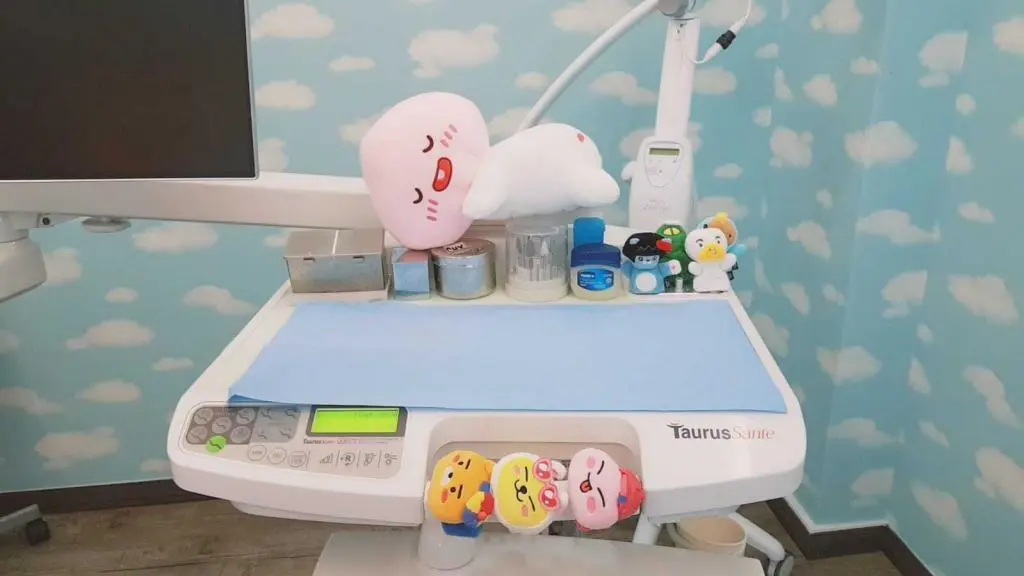
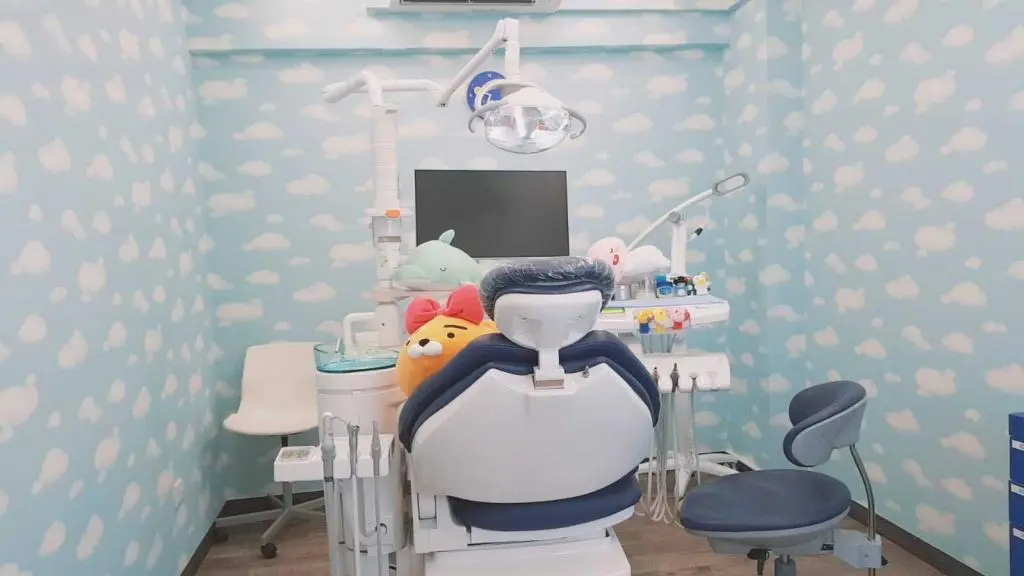
A children’s room, and no rushing
We have a dedicated children’s room, and our approach is to explain each step before we do it. We will not start any treatment until your child is comfortable enough to undergo it — if that means a first visit is nothing more than sitting in the chair and having a look, that’s a good first visit.
Subsidies for
Children’s Dental Care
Meiplus Dentalcare is a CHAS-accredited clinic. Children who are Singapore Citizens may be eligible for CHAS dental subsidies depending on household income tier — just present your child’s CHAS card at registration and we’ll apply it.
| Procedure | CHAS Blue | CHAS Orange |
|---|---|---|
| Consultation | $20.50 | $13.50 |
| Scaling | $30.00 | $20.00 |
| Polishing | $20.50 | $13.50 |
| Topical fluoride | $20.50 | $13.50 |
| Filling, simple | $30.00 | $20.00 |
| Extraction, front tooth | $28.50 | $19.00 |
These are subsidies, not fees. The amounts above come off your bill — they are the maximum MOH will subsidise per procedure, and they are not deducted from anyone’s CPF. MediSave works differently and does not cover routine children’s dental care; see our MediSave and CHAS guide for how the two schemes differ.
Subsidy amounts are published by the Ministry of Health and are current as at 1 October 2025. Eligibility and tier depend on your household’s assessed income. Pioneer Generation and Merdeka Generation schemes apply to older Singaporeans and are not applicable to children. Our team will confirm your child’s eligible subsidy at registration.
FAQs on Children’s Dentistry
What is children’s dentistry?
Children’s dentistry refers to dental care provided to infants, children and adolescents — including check-ups, cleaning, fluoride treatment, sealants and cavity treatment. It can be provided by a general dentist experienced with children, or by a paediatric dentistry specialist for more complex cases.
Does Meiplus Dentalcare have a paediatric dentist?
No. Meiplus Dentalcare’s dentists are general dentists experienced in treating children, not registered paediatric dentistry specialists. We provide gentle, patient dental care for routine check-ups, cleaning, fluoride treatment, sealants and cavity treatment. For children with significant dental anxiety, complex developmental concerns or special healthcare needs, we’re happy to advise on a referral to a paediatric dentistry specialist.
What’s the difference between a general dentist and a paediatric dental specialist?
A paediatric dentistry specialist completes postgraduate training beyond a general dental degree, focused specifically on treating children — including managing dental anxiety, developmental concerns and special healthcare needs. A general dentist can provide routine children’s dental care effectively, particularly for straightforward check-ups and treatment, but a specialist may be more appropriate for complex cases.
When should my child first see a dentist?
A child’s first dental visit is generally recommended within six months of their first tooth appearing, or by their first birthday — whichever comes first. This early visit focuses on familiarisation and guidance for parents rather than treatment.
How often should my child visit the dentist?
Most children benefit from a dental check-up every six months, similar to adults, though your dentist may recommend a different schedule depending on your child’s individual risk of decay and how their teeth are developing.
Why are baby teeth important if they fall out anyway?
Baby teeth hold space for permanent teeth to come in correctly, support proper chewing and speech development, and contribute to a child’s confidence. Losing a baby tooth too early can allow neighbouring teeth to shift and crowd the space meant for the permanent tooth.
What dental problems can young children have?
Common issues include tooth decay from frequent sugar exposure, early signs of cavities such as white or brown spots and visible holes, sensitivity, teething discomfort, and habits like thumb-sucking that can affect dental development if they persist. Frequency of sugar exposure matters more than the total amount, so sipping juice across an afternoon does more harm than the same amount with a meal.
What treatments are available for children at Meiplus Dentalcare?
We offer regular check-ups, dental sealants, topical fluoride treatment, early orthodontic assessment and gentle tooth decay treatment, all delivered in a comfortable environment with a dedicated children’s room.
Is children’s dental care covered by CHAS in Singapore?
Yes. Meiplus Dentalcare is a CHAS-accredited clinic, and children who are Singapore Citizens may be eligible depending on household income tier. MOH’s maximum subsidy is $20.50 to $30.00 for scaling and polishing, $20.50 for a consultation or topical fluoride, and $20.00 to $30.00 for a simple filling, depending on whether you hold a Blue or Orange card. Present your child’s CHAS card at registration to apply it.
How do I prepare my child for their first dental visit?
Keep the conversation positive and simple, and avoid words like “pain” or “hurt” — even reassuring a child that something “won’t hurt” plants the idea. Reading children’s books about visiting the dentist or role-playing a check-up at home both help. Our team also explains what we’re doing and why before and during treatment.
At what age should children start brushing their teeth?
Brushing should start as soon as the first tooth appears, using a soft, small-headed brush and a rice-grain-sized smear of fluoride toothpaste for children under 3, increasing to a pea-sized amount from age 3. Parents should supervise or assist until a child can reliably brush well on their own, typically around age 6 to 8.